
Heroism in the Skies: How Indian Captain Smit Machchhar Saved Flydubai Flight FZ1073
What was intended to be a routine three-and-a-half-hour flight from Dubai to Tel Aviv turned into one of the most intense mid-air crises in recent aviation history. On September 30, 2026, Flydubai Flight FZ1073, carrying 182 passengers and crew members, encountered an extraordinary emergency over international airspace that put the entire aircraft in immediate peril.
Thanks to the extraordinary bravery of Indian pilot Captain Smit Machchhar, off-duty crew members, and quick-thinking passengers, disaster was averted. The Boeing 737 MAX 8 landed safely in Tabuk, Saudi Arabia, saving every life on board.
The Timeline of the Flight FZ1073 Emergency
Flight FZ1073 departed Dubai International Airport (DXB) at 7:05 AM GST, heading west toward Tel Aviv’s Ben Gurion Airport. Approximately two and a half hours into the flight, roughly an hour before its scheduled arrival, distress calls were suddenly issued from the cockpit.
- The Sudden Descent: At approximately 05:20 UTC, telemetry data showed the aircraft entering a sudden, steep dive. Flight FZ1073 dropped nearly 17,000 feet (from 33,000 feet down to 17,000 feet) in approximately one minute.
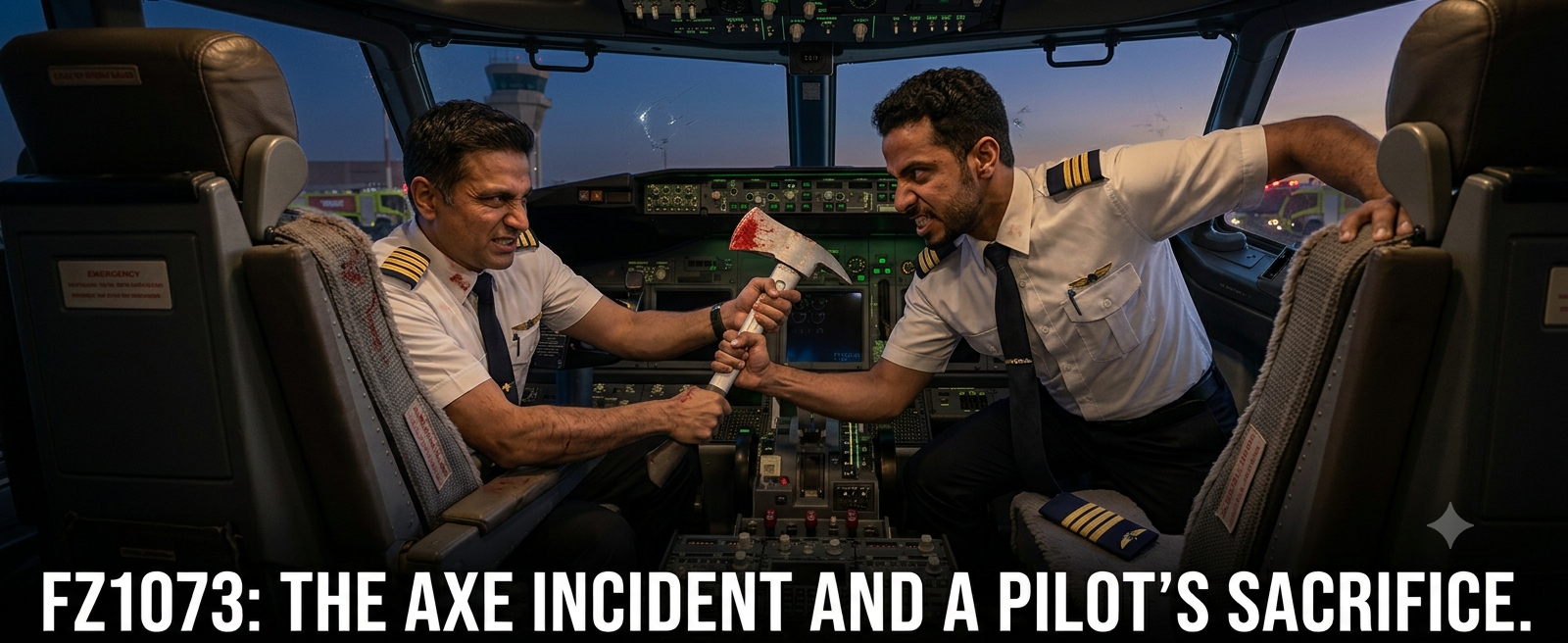
- The Cockpit Struggle: Inside the cockpit, co-pilot Hamam al-Hammami launched a sudden attack on Captain Smit Machchhar, using an emergency crash axe stored on board. The attacker put the aircraft into a nose-down pitch in an apparent attempt to crash the plane.
- Unlocking the Door: Despite suffering severe injuries during the assault, Captain Machchhar demonstrated remarkable resilience. The Indian captain managed to unlatch the reinforced cockpit door lock from inside, allowing outside intervention.
- Intervention by Passengers and Crew: Hearing screams and sensing the violent descent, off-duty personnel and passengers—including a doctor, a plumber, and off-duty pilots—rushed into the cockpit. Together, they restrained the attacker, secured him with zip-ties, and rendered vital first aid to the captain.
- Recovery and Emergency Landing: Off-duty pilots traveling as passengers assisted in regaining control of the Boeing 737. The aircraft, having sustained structural stress that damaged part of its tail rudder during the sharp pull-out, stabilized and requested an emergency diversion.
Flight FZ1073 landed safely at Prince Sultan bin Abdulaziz International Airport in Tabuk, Saudi Arabia.
Profiles in Courage: Captain Smit Machchhar and the Rescuers
Global leaders and aviation experts have praised the quick response of those on board:
- Captain Smit Machchhar (Indian National): Originally from Mumbai, India, Captain Machchhar is a veteran pilot with nearly 9,750 flying hours (predominantly on Boeing 737s). His refusal to surrender control despite grave injuries prevented a catastrophic impact. After initial emergency treatment in Tabuk, he was transferred to Abu Dhabi for specialized medical care, where he is currently in stable condition.
- The Cabin Rescuers: Passengers such as Dr. Shota Musayev, who provided immediate medical aid, alongside individuals who physically subdued the co-pilot, have been widely commended. Israeli, Indian, and international officials announced plans to recognize several passengers for civilian bravery.
The Investigation and Security Questions
As multinational authorities conduct inquiries into the incident, several key questions have emerged regarding security protocols and vetting procedures:
1. International Coordination
Because the incident involved an Emirati-registered aircraft, an Omani co-pilot, an Indian captain, and a route servicing Israel with an emergency landing in Saudi Arabia, multiple governments are participating in the investigation. The UAE Public Prosecution, alongside Saudi and international security bodies, is leading the official probe.
2. Vetting Protocols for Flight Crew
Investigators are looking closely at security background checks. Preliminary reports suggest the suspect had previously been flagged over potential extremist links. Security agencies are evaluating how these concerns were handled during standard airline vetting processes.
3. Flight Deck Equipment and Access
The use of cockpit emergency equipment in the assault has prompted calls within the aviation community to review how cockpit tools (such as crash axes required by international safety regulations) are secured and monitored during flight.
Conclusion: Lessons for Global Aviation
Flydubai Flight FZ1073 stands as both a testament to courage under pressure and a critical turning point for modern aviation security. While the quick actions of Captain Machchhar and the passengers on board prevented a tragedy, the event has initiated a broader review of crew vetting protocols, pilot mental health monitoring, and cockpit access security worldwide.
free to visit for your business GST billing software
ALSO READ THIS “India’s Authentic Hyderabadi Chicken Dum Biryani Recipe
ALSO READ THIS BLOG: Becoming a successful blogging content writer
ALSO READ THIS BLOG: How to Start a Cloud Kitchen: License Setup & Delivery Guide for 2025
please visit my youtube channel : JS TV BY SATHEESH INDIAN https://www.youtube.com/@JSTVNews