
History of India – Ancient to Modern India Timeline, Key Events & Empires
Discover the full history of India – from the Indus Valley Civilization and Maurya Empire to the Mughal era, British rule, and independent India. A complete timeline of Indian history.
Introduction
The history of India is one of the world’s most remarkable and continuous civilizations. Stretching back over 5,000 years, India has seen the rise and fall of powerful empires, the birth of major religions, colonial struggles, and its emergence as a modern global power. This article provides a complete timeline of Indian history, from the Indus Valley Civilization to independent India.
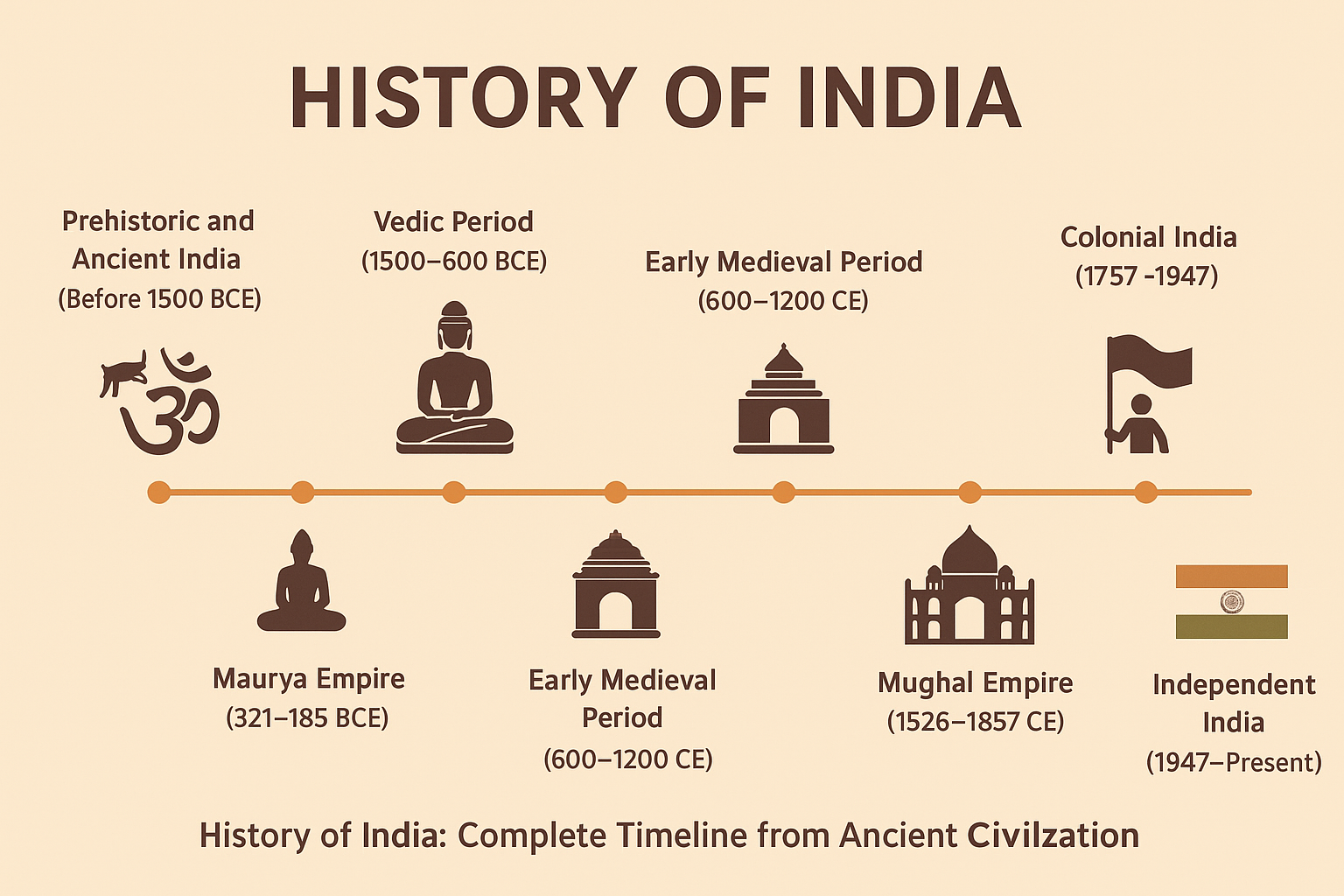
1. Prehistoric and Ancient India (Before 1500 BCE)
- Human settlements in India go back over 2 million years.
- Indus Valley Civilization (2600–1900 BCE): Among the world’s first urban civilizations, with advanced city planning, drainage, and trade. Major sites: Harappa and Mohenjo-Daro.
- Decline around 1900 BCE, possibly due to climate shifts and invasions.
2. Vedic Period (1500–600 BCE)
- Indo-Aryans introduced Sanskrit language and Vedic texts.
- Development of the varna (caste) system and early Hindu philosophy.
- Composition of sacred scriptures: Vedas, Upanishads, and epics like the Mahabharata and Ramayana.
3. Early Kingdoms and Rise of New Religions (600–320 BCE)
- Emergence of 16 mahajanapadas (kingdoms) across north India.
- Buddhism (Gautama Buddha) and Jainism (Mahavira) spread with emphasis on non-violence and equality.
- Magadha kingdom rose as a powerful state.
4. Maurya Empire (321–185 BCE)
- Founded by Chandragupta Maurya.
- Ashoka the Great (273–232 BCE): Expanded empire, embraced Buddhism, promoted peace and dharma.
- Trade and administration flourished.
5. Gupta Empire and Golden Age (320–550 CE)
- Known as India’s “Golden Age.”
- Achievements in science, mathematics, and literature: invention of zero, decimal system, Aryabhata’s astronomy, Kalidasa’s plays.
- Flourishing of Hindu art, culture, and temple architecture.
6. Early Medieval Period (600–1200 CE)
- Regional dynasties: Cholas, Palas, Rashtrakutas, Chalukyas, Pallavas.
- Cholas expanded influence into Southeast Asia.
- Growth of Bhakti movement and temple culture.
7. Delhi Sultanate (1206–1526 CE)
- Establishment of Muslim rule in India.
- Dynasties: Mamluk (Slave), Khilji, Tughlaq, Sayyid, Lodi.
- Spread of Persian culture, Islamic art, and Sufism.
- Bhakti saints and Sufi leaders promoted harmony.
8. Mughal Empire (1526–1857 CE)
- Founded by Babur in 1526.
- Major rulers:
- Akbar (1542–1605): Religious tolerance, efficient administration.
- Shah Jahan: Built the Taj Mahal.
- Aurangzeb: Expanded empire but faced revolts.
- Fusion of Indian, Persian, and Islamic cultures in art, music, and architecture.
9. Colonial India (1757–1947)
- Battle of Plassey (1757): British East India Company began political control.
- Exploitation of resources, famines, and social reforms.
- 1857 Revolt (First War of Independence) shook British rule but was suppressed.
- Growth of Indian National Congress (1885) and nationalist leaders like Tilak, Gokhale, Tagore.
10. Freedom Struggle and Independence (1900–1947)
- Mahatma Gandhi led non-violent movements: Non-Cooperation, Civil Disobedience, Quit India.
- Other leaders: Nehru, Sardar Patel, Subhas Chandra Bose, Bhagat Singh.
- 1947: Independence achieved, but Partition created India and Pakistan.
11. Independent India (1947–Present)
- 1947–1950: Adoption of the Indian Constitution, making India a republic.
- Wars with Pakistan and China, consolidation of democracy.
- 1991 Economic reforms liberalized the economy.
- Rise as a global power in technology, space research, and diplomacy.
- Present India is a diverse democracy balancing tradition with modernization.
Conclusion
The history of India reflects resilience, cultural diversity, and transformation. From the Indus Valley and the Gupta Golden Age to colonial rule and independence, India’s story is one of innovation, struggle, and progress. Today, India stands as a modern democracy with a rich legacy that continues to inspire the world.
CLIK HEARE VYAPAR GST BILLING SOFTWARE
ALSO READ THIS “India’s Authentic Hyderabadi Chicken Dum Biryani Recipe
ALSO READ THIS BLOG: Becoming a successful blogging content writer
ALSO READ THIS BLOG: How to Start a Cloud Kitchen: License Setup & Delivery Guide for 2025
please visit my youtube channel : JS TV BY SATHEESH INDIAN https://www.youtube.com/@JSTVNews
హిందూస్తాన్ చరిత్ర – ప్రాచీన భారతదేశం నుండి ఆధునిక భారతదేశం వరకు ఒక కాలక్రమం, ముఖ్య సంఘటనలు & సామ్రాజ్యాలు
సింధు లోయ నాగరికత మరియు మౌర్య సామ్రాజ్యం నుండి మొఘల్ శకం, బ్రిటిష్ పాలన మరియు స్వతంత్ర భారతదేశం వరకు భారతదేశ పూర్తి చరిత్రను కనుగొనండి. భారత చరిత్ర యొక్క పూర్తి కాలక్రమం. పరిచయం భారతదేశ చరిత్ర ప్రపంచంలోని అత్యంత ముఖ్యమైన మరియు నిరంతర నాగరికతలలో ఒకటి. 5,000 సంవత్సరాలకు పైగా విస్తరించి ఉన్న భారతదేశం, శక్తివంతమైన సామ్రాజ్యాల ఆవిర్భావం మరియు పతనాన్ని, ప్రధాన మతాల పుట్టుకను, వలసవాద పోరాటాలను మరియు ఆధునిక ప్రపంచ శక్తిగా దాని ఆవిర్భావాన్ని చూసింది. ఈ కథనం సింధు లోయ నాగరికత నుండి స్వతంత్ర భారతదేశం వరకు భారత చరిత్ర యొక్క పూర్తి కాలక్రమాన్ని అందిస్తుంది.
1. చరిత్ర పూర్వ మరియు ప్రాచీన భారతదేశం (క్రీ.పూ. 1500కి ముందు)
భారతదేశంలో మానవ నివాసాలు 2 మిలియన్ సంవత్సరాలకు పైగా ఉన్నాయి. సింధు లోయ నాగరికత (క్రీ.పూ. 2600-1900): ప్రపంచంలోని మొదటి పట్టణ నాగరికతలలో ఒకటి, అధునాతన నగర ప్రణాళిక, పారుదల మరియు వాణిజ్యం కలిగి ఉంది. ప్రధాన ప్రదేశాలు: హరప్పా మరియు మొహెంజో-దారో. సుమారు క్రీ.పూ. 1900లో, వాతావరణ మార్పులు మరియు ఆక్రమణల కారణంగా పతనం.
2. వేద కాలం (క్రీ.పూ. 1500-600)
ఇండో-ఆర్యన్లు సంస్కృత భాష మరియు వేద గ్రంథాలను పరిచయం చేశారు. వర్ణ (కులం) వ్యవస్థ మరియు తొలి హిందూ తత్వశాస్త్రం అభివృద్ధి. వేదాలు, ఉపనిషత్తులు, మరియు మహాభారతం, రామాయణం వంటి ఇతిహాసాలు రచించడం జరిగింది.
3. తొలి రాజ్యాలు మరియు కొత్త మతాల ఆవిర్భావం (క్రీ.పూ. 600-320)
ఉత్తర భారతదేశం అంతటా 16 మహాజనపదాలు (రాజ్యాలు) ఆవిర్భవించాయి. బౌద్ధమతం (గౌతమ బుద్ధుడు) మరియు జైనమతం (మహావీరుడు) అహింస మరియు సమానత్వానికి ప్రాధాన్యత ఇస్తూ వ్యాపించాయి. మగధ రాజ్యం ఒక శక్తివంతమైన రాష్ట్రంగా ఎదిగింది.
4. మౌర్య సామ్రాజ్యం (క్రీ.పూ. 321-185)
చంద్రగుప్త మౌర్య స్థాపించారు. అశోకుడు (క్రీ.పూ. 273-232): సామ్రాజ్యాన్ని విస్తరించారు, బౌద్ధమతాన్ని స్వీకరించారు, శాంతి మరియు ధర్మాన్ని ప్రోత్సహించారు. వాణిజ్యం మరియు పరిపాలన అభివృద్ధి చెందాయి.
5. గుప్త సామ్రాజ్యం మరియు స్వర్ణయుగం (క్రీ.శ. 320-550)
భారతదేశం యొక్క “స్వర్ణయుగం”గా పిలువబడింది. సైన్స్, గణితం, మరియు సాహిత్యంలో విజయాలు: సున్నా ఆవిష్కరణ, దశాంశ వ్యవస్థ, ఆర్యభట్ట యొక్క ఖగోళ శాస్త్రం, కాళిదాసు నాటకాలు. హిందూ కళ, సంస్కృతి, మరియు దేవాలయ నిర్మాణ శైలి అభివృద్ధి చెందాయి.
6. తొలి మధ్యయుగ కాలం (క్రీ.శ. 600-1200)
ప్రాంతీయ రాజవంశాలు: చోళులు, పాలాలు, రాష్ట్రకూటులు, చాళుక్యులు, పల్లవులు. చోళులు ఆగ్నేయాసియా వరకు తమ ప్రభావాన్ని విస్తరించారు. భక్తి ఉద్యమం మరియు దేవాలయ సంస్కృతి అభివృద్ధి.
7. ఢిల్లీ సుల్తానేట్ (క్రీ.శ. 1206-1526)
భారతదేశంలో ముస్లిం పాలన స్థాపన. రాజవంశాలు: మమ్లూక్ (బానిస), ఖిల్జీ, తుగ్లక్, సయ్యద్, లోడీ. పర్షియన్ సంస్కృతి, ఇస్లామిక్ కళ, మరియు సూఫీయిజం వ్యాప్తి. భక్తి సాధువులు మరియు సూఫీ నాయకులు సామరస్యాన్ని ప్రోత్సహించారు.
8. మొఘల్ సామ్రాజ్యం (క్రీ.శ. 1526-1857)
1526లో బాబర్ స్థాపించారు. ప్రధాన పాలకులు: అక్బర్ (1542-1605): మత సహనం, సమర్థవంతమైన పరిపాలన. షాజహాన్: తాజ్ మహల్ నిర్మించారు. ఔరంగజేబు: సామ్రాజ్యాన్ని విస్తరించారు కానీ తిరుగుబాట్లు ఎదుర్కొన్నారు. కళ, సంగీతం, మరియు నిర్మాణ శైలిలో భారతీయ, పర్షియన్, మరియు ఇస్లామిక్ సంస్కృతుల సమ్మేళనం.
9. వలస భారతదేశం (1757-1947)
ప్లాసీ యుద్ధం (1757): బ్రిటిష్ ఈస్ట్ ఇండియా కంపెనీ రాజకీయ నియంత్రణ ప్రారంభించింది. వనరుల దోపిడీ, కరువులు, మరియు సామాజిక సంస్కరణలు. 1857 తిరుగుబాటు (మొదటి స్వాతంత్ర్య సంగ్రామం) బ్రిటిష్ పాలనను కదిలించింది కానీ అణచివేయబడింది. భారత జాతీయ కాంగ్రెస్ (1885) మరియు తిలక్, గోఖలే, టాగూర్ వంటి జాతీయ నాయకుల అభివృద్ధి.
10. స్వాతంత్ర పోరాటం మరియు స్వాతంత్రం (1900-1947)
మహాత్మా గాంధీ అహింసా ఉద్యమాలకు నాయకత్వం వహించారు: సహాయ నిరాకరణ, శాసనోల్లంఘన, క్విట్ ఇండియా. ఇతర నాయకులు: నెహ్రూ, సర్దార్ పటేల్, సుభాష్ చంద్ర బోస్, భగత్ సింగ్. 1947: స్వాతంత్రం లభించింది, కానీ విభజన భారతదేశం మరియు పాకిస్తాన్లను సృష్టించింది.
11. స్వతంత్ర భారతదేశం (1947-ప్రస్తుతం)
1947–1950: భారత రాజ్యాంగం ఆమోదం, భారతదేశాన్ని ఒక గణతంత్ర దేశంగా మార్చింది. పాకిస్తాన్ మరియు చైనాతో యుద్ధాలు, ప్రజాస్వామ్య సుస్థిరీకరణ. 1991లో ఆర్థిక సంస్కరణలు ఆర్థిక వ్యవస్థను సరళీకరించాయి. సాంకేతికత, అంతరిక్ష పరిశోధన, మరియు దౌత్యంలో ప్రపంచ శక్తిగా ఆవిర్భావం. ప్రస్తుత భారతదేశం సంప్రదాయం మరియు ఆధునికీకరణ మధ్య సమతుల్యం పాటిస్తున్న ఒక వైవిధ్యమైన ప్రజాస్వామ్య దేశం.
ముగింపు
భారతదేశ చరిత్ర పట్టుదల, సాంస్కృతిక వైవిధ్యం మరియు పరివర్తనను ప్రతిబింబిస్తుంది. సింధు లోయ మరియు గుప్త స్వర్ణయుగం నుండి వలస పాలన మరియు స్వాతంత్ర్యం వరకు, భారతదేశ కథ ఆవిష్కరణ, పోరాటం మరియు పురోగతితో నిండి ఉంది. నేడు, భారతదేశం గొప్ప వారసత్వంతో ఆధునిక ప్రజాస్వామ్య దేశంగా ప్రపంచాన్ని ప్రేరేపిస్తోంది.