

History of Sweden: From Vikings to Modern Welfare State
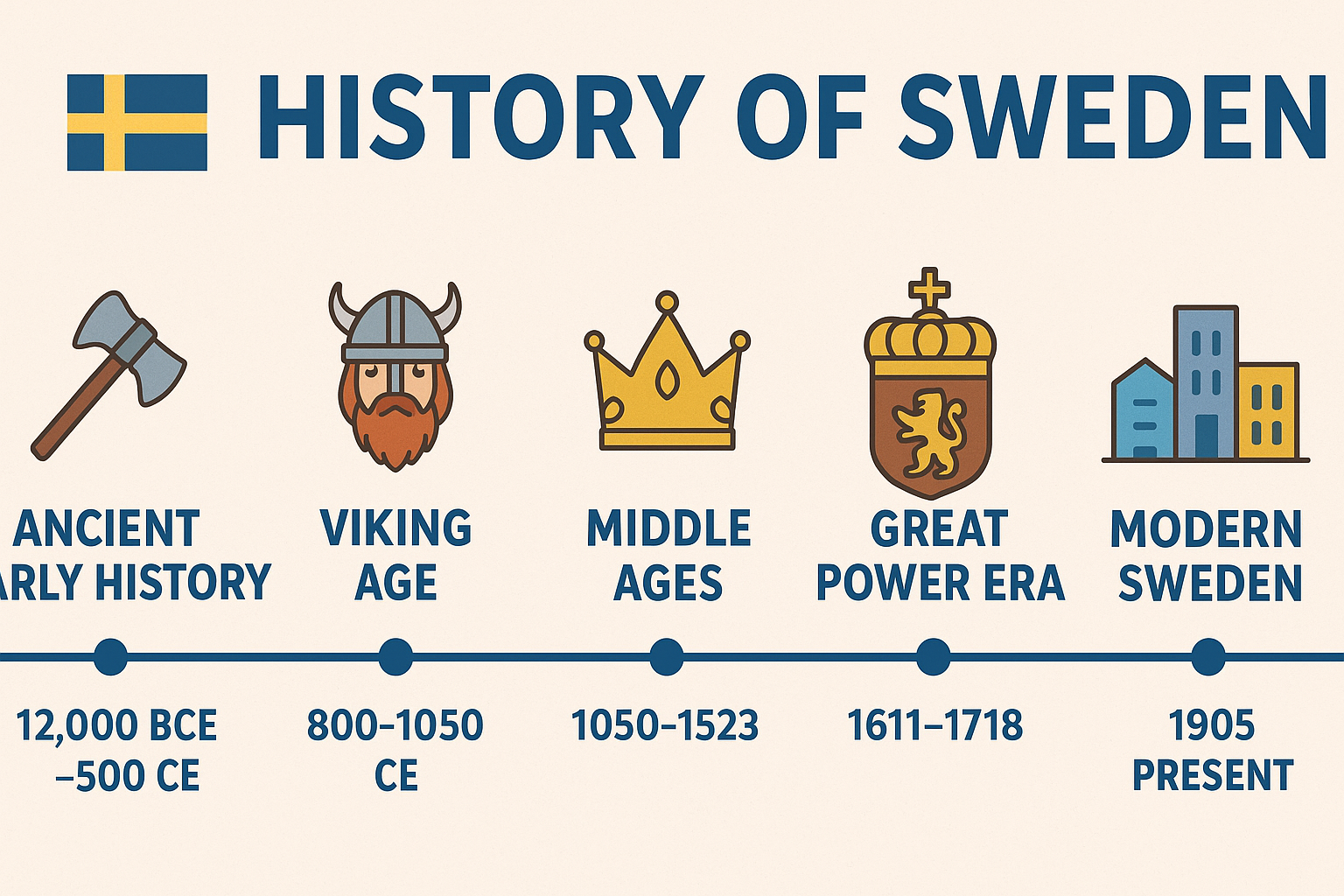
Discover the complete history of Sweden – from the Viking Age and medieval kingdoms to its rise as a European power, and its transformation into a modern welfare state.
🏛️ Ancient & Early History of Sweden
The history of Sweden begins after the Ice Age, when people first settled the Scandinavian region around 12,000 BCE. Early Swedes were hunters, fishers, and farmers. By the Bronze Age (1700–500 BCE), Sweden was actively trading with Europe, leaving behind impressive rock carvings of ships and rituals.
During the Iron Age (500 BCE – 800 CE), Sweden experienced social and economic growth, influenced by contact with the Roman Empire, which brought coins, tools, and weapons.
⚔️ The Viking Age (800–1050 CE)
Sweden is best known for its Viking heritage. Unlike Norwegian and Danish Vikings, who sailed westward, Swedish Vikings—known as Varangians—traveled eastward, establishing trade routes through Russia to the Byzantine Empire and the Middle East.
Important Viking trade centers included Birka and Uppsala, and Swedish Vikings even served as elite warriors (Varangian Guard) for Byzantine emperors.
✝️ Sweden in the Middle Ages (1050–1523)
By the 11th century, Christianity replaced Norse paganism in Sweden. The country was formally recognized as a Christian kingdom, strengthening ties with Europe.
In 1397, Sweden joined the Kalmar Union with Denmark and Norway, ruled by a single monarch. However, Swedes resisted Danish dominance, leading to centuries of conflict.
👑 Rise of Independent Sweden (1523–1611)
The Kalmar Union ended in 1523, when Gustav Vasa was crowned king. He is often called the “Father of Modern Sweden.”
- Introduced Protestant Lutheranism, breaking from the Catholic Church.
- Strengthened monarchy and centralized power.
- Established foundations for a strong Swedish nation.
⚔️ The Swedish Empire & Great Power Era (1611–1718)
Between the 17th and early 18th centuries, Sweden rose as a European superpower:
- Gustavus Adolphus, a brilliant military leader, made Sweden a key player in the Thirty Years’ War.
- Sweden controlled vast territories, including Finland, Estonia, Latvia, and parts of Germany.
- This period is known as the Great Power Era.
However, defeat in the Great Northern War (1700–1721) against Russia ended Sweden’s empire.
📜 Sweden in the 18th & 19th Centuries
- 1809: Sweden lost Finland to Russia, a major territorial loss.
- A new constitution limited royal power and introduced parliamentary rule.
- 1814: Sweden entered a political union with Norway, which lasted until 1905.
- The Industrial Revolution transformed Sweden, while poverty led to mass emigration—over a million Swedes moved to the USA.
🌍 Sweden in the 20th Century
- 1905: Norway peacefully separated from Sweden.
- World War I & II: Sweden remained neutral, though it maintained trade with both sides.
- Post-WWII: Sweden developed the famous “Swedish Model”—a strong welfare state with universal healthcare, education, and social security.
🇸🇪 Modern Sweden
Today, Sweden is known worldwide for its high standard of living, innovation, and neutrality.
- 1995: Joined the European Union (but not the Eurozone).
- 2022 onward: Sweden applied for NATO membership in response to global security concerns.
- Famous for gender equality, sustainability policies, technology (Spotify, IKEA, Ericsson), and cultural exports.
✅ Conclusion
Sweden’s history spans from Viking explorers to European empire and finally to a modern democratic welfare state. Its peaceful diplomacy, economic innovation, and social equality make it a global model of progress.
FOR YOUR GST BILLING:
ALSO READ THIS “India’s Authentic Hyderabadi Chicken Dum Biryani Recipe
ALSO READ THIS BLOG: Becoming a successful blogging content writer
ALSO READ THIS BLOG: How to Start a Cloud Kitchen: License Setup & Delivery Guide for 2025
please visit my youtube channel : JS TV BY SATHEESH INDIAN https://www.youtube.com/@JSTVNews
స్వీడన్ యొక్క చరిత్ర: వైకింగ్స్ నుండి ఆధునిక సంక్షేమ రాజ్యానికి
స్వీడన్ యొక్క సంపూర్ణ చరిత్రను అన్వేషించండి – వైకింగ్ యుగం మరియు మధ్యయుగ రాజ్యాల నుండి, ఇది ఒక యూరోపియన్ శక్తిగా ఎదుగుదల మరియు ఆధునిక సంక్షేమ రాజ్యంగా మారడం వరకు.
🏛️ ప్రాచీన & ప్రారంభ చరిత్ర
స్వీడన్ చరిత్ర 12,000 BCE నాటి కాలంలో ప్రారంభమవుతుంది, అప్పటి పర్యావరణ మార్పుల తర్వాత స్కాండినేవియా ప్రాంతంలో జనాలు స్థాపించబడతారు. ఆ సమయంలో స్వీడిష్ ప్రజలు వేట, చేపలు పట్టడం మరియు వ్యవసాయం చేస్తూ జీవించారు. బంగారు యుగం (1700–500 BCE) నాటికి, స్వీడన్ యూరప్తో వ్యాపార సంబంధాలను పెంచుకొని, నౌకలు మరియు మతపరమైన చిహ్నాలతో అద్భుతమైన గాయన శిల్పాలను వదిలారు.
ఐరన్ యుగం (500 BCE – 800 CE) లో, స్వీడన్ సామాజిక మరియు ఆర్థిక అభివృద్ధిని అనుభవించింది, ఇది రోమన్ సామ్రాజ్యంతో జరిగిన సంబంధాలతో ప్రేరితమైంది, దీని ద్వారా నాణేలు, ఉపకరణాలు మరియు ఆయుధాలు స్వీడన్కు చేరాయి.
⚔️ వైకింగ్ యుగం (800–1050 CE)
స్వీడన్ తన వైకింగ్ వారసత్వంతో ప్రసిద్ధి చెందింది. నార్వే మరియు డెన్మార్క్ వైకింగ్స్ పశ్చిమ దిశలో ప్రయాణించినప్పటికీ, స్వీడిష్ వైకింగ్స్—వారాంజియన్లు—ఈశాన్య దిశలో ప్రయాణించి, రష్యా, బైజెంటైన్ సామ్రాజ్యంతో మరియు మధ్య ప్రాచ్య దేశాలతో వ్యాపార మార్గాలను స్థాపించారు.
ప్రధానమైన వైకింగ్ వాణిజ్య కేంద్రాలు బిర్కా మరియు అప్సాలా ఉన్నాయి. స్వీడిష్ వైకింగ్స్ బైజెంటైన్ చక్రవర్తుల కోసం ఎలైట్ యోధులుగా (వారాంజియన్ గార్డు) కూడా సేవలు అందించారు.
✝️ స్వీడన్ మధ్యయుగంలో (1050–1523)
11వ శతాబ్దానికి, క్రైస్తవ మతం స్వీడన్లో నార్స్ పగాన్ మతాన్ని ప్రతిస్థాపించిపోయింది. దేశం అధికారికంగా క్రైస్తవ రాజ్యంగా గుర్తించబడింది, తద్వారా యూరోపాతో సంబంధాలు బలపడ్డాయి.
1397లో, స్వీడన్ డెన్మార్క్ మరియు నార్వేతో కలిపి కాల్మార్ యూనియన్ను చేరింది, ఒకే రాజు వారు పాలించారు. కానీ స్వీడిష్ ప్రజలు డెన్మార్క్ ఆధిపత్యానికి వ్యతిరేకంగా పోరాటం చేశార, దీని కారణంగా శతాబ్దాల పాటు పోరాటాలు చోటుచేసుకున్నాయి.
👑 స్వీడన్ యొక్క స్వాతంత్ర్య పెరుగుదల (1523–1611)
1523లో కాల్మార్ యూనియన్ ముగిసింది, గుస్థావ్ వాసా రాజుగా కిరీటమొందినప్పుడు. ఆయనే “ఆధునిక స్వీడన్ పితామహుడు” అని పిలువబడతారు.
- ప్రోటెస్టంట్ లూథరనిజాన్ని ప్రవేశపెట్టారు, కాథలిక్ చర్చి నుండి విడిపోయారు.
- రాజవంశాన్ని బలోపేతం చేశారు మరియు అధికారం కేంద్రితమైంది.
- ఒక బలమైన స్వీడిష్ జాతి పునర్నిర్మాణానికి పునాదులు వేసారు.
⚔️ స్వీడన్ సామ్రాజ్యం & మహా శక్తి కాలం (1611–1718)
17వ శతాబ్దం నుండి 18వ శతాబ్దం ప్రారంభం వరకు, స్వీడన్ యూరోపియన్ శక్తిగా ఎదిగింది:
- గుస్థావస్ ఆదొల్పస్, ఒక ప్రతిభావంతమైన సైనిక నాయకుడు, స్వీడన్ను 30 సంవత్సరాల యుద్ధంలో కీలక క్రీడాకారిగా మార్చాడు.
- స్వీడన్ ఫిన్లాండ్, ఎస్టోనియా, లాట్వియా మరియు జర్మనీ యొక్క భాగాలను కలిగి ఉండేది.
- ఈ కాలాన్ని “మహా శక్తి కాలం”గా పిలుస్తారు.
తదుపరి, 1700–1721 మధ్య గడ్డిపొత్తుల యుద్ధం ద్వారా స్వీడన్ సామ్రాజ్యం ముగిసింది.
📜 18వ మరియు 19వ శతాబ్దాలలో స్వీడన్
1809: స్వీడన్ రష్యా నుండి ఫిన్లాండ్ను కోల్పోయింది, ఇది ఒక పెద్ద భూభాగ నష్టం.
కొత్త రాజ్యాంగం రాజు అధికారాన్ని పరిమితం చేసి, పార్లమెంటరీ పాలనను ప్రవేశపెట్టింది.
1814లో స్వీడన్ నార్వేతో రాజకీయ సంఘాన్ని చేరింది, ఇది 1905 వరకు కొనసాగింది.
ఇండస్ట్రియల్ విప్లవం స్వీడన్ను రూపాంతరం చేసింది, అయితే దారిద్ర్యంతో లక్షలమందినిప్పుడు అమెరికాకు వలస వెళ్లిపోయారు.
🌍 20వ శతాబ్దంలో స్వీడన్
1905: నార్వే స్వీడన్ నుండి శాంతియుతంగా విడిపోయింది.
ప్రథమ & ద్వితీయ ప్రపంచ యుద్ధాలు: స్వీడన్ 중립ంగా నిలిచింది, అయితే రెండు పక్షాల వైపులా వ్యాపారం కొనసాగించింది.
WWII అనంతరం: స్వీడన్ ప్రసిద్ధ “స్వీడిష్ మోడల్” ను అభివృద్ధి చేసింది—సంక్షేమ రాజ్యానికి ప్రపంచవ్యాప్తంగా ఖ్యాతి వచ్చింది, ఇందులో సర్వసామాన్య ఆరోగ్యం, విద్య, మరియు సామాజిక భద్రత ఉన్నాయి.
🇸🇪 ఆధునిక స్వీడన్
ఈ రోజుల్లో స్వీడన్ దాని ఉన్నత జీవన ప్రమాణాలు, ఆవిష్కరణలు మరియు నైరూప్యతకు ప్రపంచవ్యాప్తంగా ప్రసిద్ధి చెందింది.
- 1995: యూరోపియన్ యూనియన్లో చేరింది (కానీ యూరో జోన్లో కాదు).
- 2022: స్వీడన్ గ్లోబల్ భద్రతా సమస్యల కారణంగా నాటో సభ్యత్వం కోసం దరఖాస్తు చేసింది.
- ప్రసిద్ధి: జెండర్ సమానత్వం, సుస్థిరత విధానాలు, సాంకేతికత (స్పోటిఫై, ఐకియా, ఎరిక్సన్) మరియు సాంస్కృతిక ఎగుమతులు.
✅ సంక్షేపం
స్వీడన్ యొక్క చరిత్ర వైకింగ్ అన్వేషణల నుండి యూరోపియన్ సామ్రాజ్యంగా ఎదుగుదల మరియు ఆధునిక ప్రజాస్వామ్య సంక్షేమ రాజ్యంగా మార్పు వరకు విస్తరించాయి. దీని శాంతియుత విదేశీ విధానం, ఆర్థిక ఆవిష్కరణ మరియు సామాజిక సమానత్వం ఈ దేశాన్ని ప్రగతిశీలతకు గ్లోబల్ మోడల్గా నిలిపాయి.