
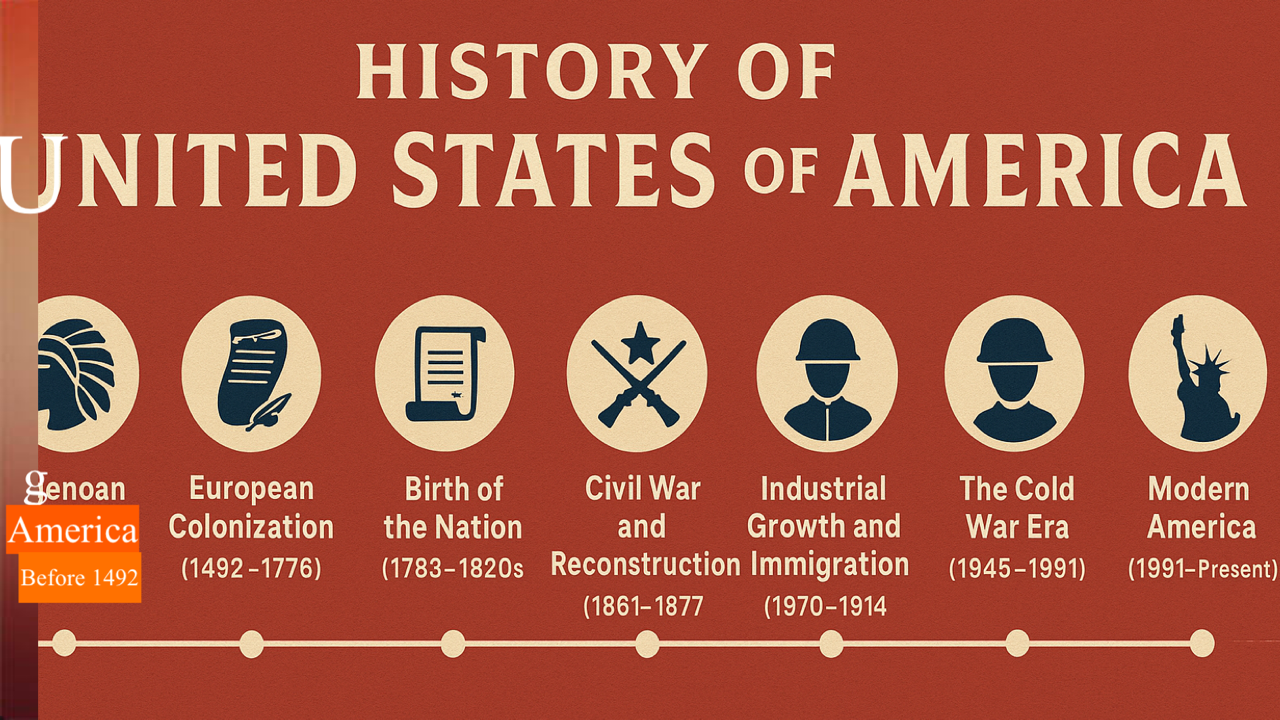
History of the United States of America – Timeline, Key Events, and Evolution
Explore the complete history of the United States of America – from Native civilizations and European colonization to independence, the Civil War, world wars, and its rise as a global superpower.
Introduction
The history of the United States of America (USA) is a story of struggle, innovation, freedom, and transformation. From the time of Native American civilizations to becoming a modern global superpower, the journey of the U.S. is filled with defining moments that shaped not only the nation but also the world. This article covers the complete history of the USA in a simple, timeline-based way.
1. Indigenous America (Before 1492)
- Native Americans lived across the continent for thousands of years.
- Advanced cultures such as the Pueblo, Iroquois, and Mississippian mound builders thrived.
- Rich traditions, farming techniques, and trade routes existed long before Europeans arrived.
2. European Colonization (1492–1776)
- 1492: Christopher Columbus’s voyage opened the doors for European settlement.
- 1607: The first permanent English colony was established in Jamestown, Virginia.
- Colonies expanded along the Atlantic Coast, creating the foundation of the modern U.S.
- Tensions with Britain grew due to heavy taxation and lack of representation.
3. The American Revolution (1775–1783)
- 1775: Battles of Lexington and Concord marked the beginning of the Revolutionary War.
- 1776: The Declaration of Independence, written by Thomas Jefferson, was signed on July 4.
- 1783: The Treaty of Paris officially recognized U.S. independence from Britain.
4. Birth of the Nation (1783–1820s)
- 1787: The U.S. Constitution was written, creating a strong federal government.
- 1789: George Washington became the first President.
- Bill of Rights (1791) protected freedoms such as speech, press, and religion.
- Louisiana Purchase (1803) doubled the nation’s size.
5. Civil War and Reconstruction (1861–1877)
- Conflict between the North (Union) and South (Confederacy) erupted over slavery.
- 1861–1865: The Civil War ended with Union victory.
- 1863: Abraham Lincoln issued the Emancipation Proclamation, freeing enslaved people.
- Slavery was abolished with the 13th Amendment (1865).
6. Industrial Growth and Immigration (1870–1914)
- The U.S. became an industrial power with factories, railroads, and steel industries.
- Millions of immigrants from Europe and Asia arrived, shaping American culture.
- Native Americans were forced off their ancestral lands.
7. The World Wars and Great Depression (1914–1945)
- World War I (1917–1918): U.S. entry helped Allies win.
- 1920s: Economic boom, jazz age, and prohibition.
- 1929: The Great Depression devastated the economy.
- World War II (1941–1945): After Pearl Harbor, the U.S. joined the war and played a key role in defeating Germany and Japan.
8. The Cold War Era (1945–1991)
- The U.S. and the Soviet Union entered a global rivalry.
- Major events: Korean War, Vietnam War, Space Race, Cuban Missile Crisis.
- The Civil Rights Movement brought change under leaders like Martin Luther King Jr.
- 1969: Neil Armstrong became the first man to walk on the moon.
- 1991: Cold War ended with the collapse of the Soviet Union.
9. Modern America (1991–Present)
- U.S. became the world’s strongest superpower.
- 2001: September 11 attacks reshaped U.S. foreign policy.
- Wars in Afghanistan and Iraq followed.
- 2008: Barack Obama became the first African American President.
- 2020: COVID-19 pandemic deeply impacted the nation.
- Today, the U.S. faces challenges in technology, climate change, politics, and global leadership.
Conclusion
The history of the United States is a remarkable journey from small colonies to a global leader. Every era — from independence and the Civil War to world wars and the space age — contributed to shaping the nation. Understanding America’s past gives us insight into its present challenges and future possibilities.
CLIK HEARE VYAPAR GST BILLING SOFTWARE
ALSO READ THIS “India’s Authentic Hyderabadi Chicken Dum Biryani Recipe
ALSO READ THIS BLOG: Becoming a successful blogging content writer
ALSO READ THIS BLOG: How to Start a Cloud Kitchen: License Setup & Delivery Guide for 2025
please visit my youtube channel : JS TV BY SATHEESH INDIAN https://www.youtube.com/@JSTVNews
సంయుక్త రాష్ట్రాల చరిత్ర (USA) – కాలక్రమం, ముఖ్య సంఘటనలు మరియు పరిణామం
పరిచయం
సంయుక్త రాష్ట్రాల (USA) చరిత్ర అనేది పోరాటం, నూతన ఆవిష్కరణలు, స్వేచ్ఛ మరియు పరివర్తనతో కూడిన గాథ. స్థానిక అమెరికన్ల నాగరికతల నుండి ఆధునిక ప్రపంచ శక్తిగా ఎదిగిన ఈ దేశ ప్రయాణంలో దేశాన్ని మాత్రమే కాకుండా ప్రపంచాన్ని కూడా ప్రభావితం చేసిన అనేక కీలక ఘట్టాలు ఉన్నాయి. ఈ వ్యాసంలో అమెరికా సంపూర్ణ చరిత్రను ఒక సరళమైన, కాలక్రమ పద్ధతిలో వివరిస్తున్నాము.
1. స్వదేశీ అమెరికా (1492కి ముందు)
- వేల సంవత్సరాల నుండి స్థానిక అమెరికన్లు ఈ ఖండంలో నివసించారు.
- ప్యూబ్లో, ఇరోక్వోయిస్ మరియు మిస్సిసిప్పియన్ మౌండ్ బిల్డర్స్ వంటి అధునాతన సంస్కృతులు వర్థిల్లి.
- ఐరోపా వాసులు రాకముందే ఇక్కడ గొప్ప సంప్రదాయాలు, వ్యవసాయ పద్ధతులు మరియు వాణిజ్య మార్గాలు ఉన్నాయి.
2. ఐరోపా వలసలు (1492–1776)
- 1492: క్రిస్టోఫర్ కొలంబస్ ప్రయాణం ఐరోపా వాసుల స్థిరనివాసాలకు ద్వారాలు తెరిచింది.
- 1607: వర్జీనియాలోని జేమ్స్టౌన్లో మొదటి శాశ్వత ఆంగ్ల వలస ఏర్పాటు చేయబడింది.
- అట్లాంటిక్ తీరం వెంబడి వలసలు విస్తరించి ఆధునిక U.S.కు పునాది వేశాయి.
- అధిక పన్నులు మరియు ప్రాతినిధ్యం లేకపోవడం వల్ల బ్రిటన్తో ఉద్రిక్తతలు పెరిగాయి.
3. అమెరికా విప్లవం (1775–1783)
- 1775: లెక్సింగ్టన్ మరియు కాన్కార్డ్ యుద్ధాలు విప్లవ యుద్ధానికి నాంది పలికాయి.
- 1776: థామస్ జెఫర్సన్ రాసిన స్వాతంత్ర్య ప్రకటన జూలై 4న సంతకం చేయబడింది.
- 1783: పారిస్ ఒప్పందం U.S. స్వాతంత్ర్యాన్ని బ్రిటన్ నుండి అధికారికంగా గుర్తించింది.
4. దేశం ఆవిర్భావం (1783–1820లు)
- 1787: U.S. రాజ్యాంగం రాయబడింది, ఇది బలమైన సమాఖ్య ప్రభుత్వాన్ని సృష్టించింది.
- 1789: జార్జ్ వాషింగ్టన్ మొదటి అధ్యక్షుడయ్యారు.
- బిల్ ఆఫ్ రైట్స్ (1791): వాక్ స్వాతంత్ర్యం, పత్రికా స్వేచ్ఛ మరియు మత స్వాతంత్ర్యం వంటి వాటికి రక్షణ కల్పించింది.
- లూసియానా కొనుగోలు (1803): దేశ విస్తీర్ణం రెట్టింపయ్యింది.
5. అంతర్యుద్ధం మరియు పునర్నిర్మాణం (1861–1877)
- బానిసత్వంపై ఉత్తరం (యూనియన్) మరియు దక్షిణం (కాన్ఫెడరసీ) మధ్య పోరాటం ప్రారంభమైంది.
- 1861–1865: అంతర్యుద్ధం యూనియన్ విజయంతో ముగిసింది.
- 1863: అబ్రహం లింకన్ బానిసలను విముక్తి చేస్తూ ఎమాన్సిపేషన్ ప్రోక్లమేషన్ జారీ చేశారు.
- 13వ సవరణ (1865): బానిసత్వం రద్దు చేయబడింది.
6. పారిశ్రామిక అభివృద్ధి మరియు వలసలు (1870–1914)
- కర్మాగారాలు, రైల్వేలు మరియు ఉక్కు పరిశ్రమలతో U.S. ఒక పారిశ్రామిక శక్తిగా ఎదిగింది.
- ఐరోపా మరియు ఆసియా నుండి లక్షలాది మంది వలసదారులు వచ్చి అమెరికన్ సంస్కృతిని రూపొందించారు.
- స్థానిక అమెరికన్లను వారి పూర్వీకుల భూముల నుండి బలవంతంగా తరలించారు.
7. ప్రపంచ యుద్ధాలు మరియు ఆర్థిక మాంద్యం (1914–1945)
- మొదటి ప్రపంచ యుద్ధం (1917–1918): U.S. ప్రవేశం మిత్రదేశాల విజయానికి తోడ్పడింది.
- 1920లు: ఆర్థిక వృద్ధి, జాజ్ యుగం మరియు మద్యపాన నిషేధం.
- 1929: మహా ఆర్థిక మాంద్యం దేశ ఆర్థిక వ్యవస్థను దెబ్బతీసింది.
- రెండవ ప్రపంచ యుద్ధం (1941–1945): పర్ల్ హార్బర్ తర్వాత, U.S. యుద్ధంలో చేరి జర్మనీ మరియు జపాన్లను ఓడించడంలో కీలక పాత్ర పోషించింది.
8. ప్రచ్ఛన్న యుద్ధం (1945–1991)
- U.S. మరియు సోవియట్ యూనియన్ మధ్య ప్రపంచ స్థాయి పోటీ మొదలైంది.
- ముఖ్య సంఘటనలు: కొరియా యుద్ధం, వియత్నాం యుద్ధం, అంతరిక్ష పోటీ, క్యూబన్ మిస్సైల్ సంక్షోభం.
- మార్టిన్ లూథర్ కింగ్ జూనియర్ వంటి నాయకుల ఆధ్వర్యంలో పౌర హక్కుల ఉద్యమం గణనీయమైన మార్పులు తెచ్చింది.
- 1969: నీల్ ఆర్మ్స్ట్రాంగ్ చంద్రుడిపై నడిచిన మొదటి వ్యక్తి అయ్యారు.
- 1991: సోవియట్ యూనియన్ పతనంతో ప్రచ్ఛన్న యుద్ధం ముగిసింది.
9. ఆధునిక అమెరికా (1991–ప్రస్తుతం)
- U.S. ప్రపంచంలోనే అత్యంత శక్తివంతమైన దేశంగా మారింది.
- 2001: సెప్టెంబర్ 11 దాడులు U.S. విదేశాంగ విధానాన్ని మార్చివేశాయి.
- ఆ తర్వాత ఆఫ్ఘనిస్తాన్ మరియు ఇరాక్లో యుద్ధాలు జరిగాయి.
- 2008: బరాక్ ఒబామా మొదటి ఆఫ్రికన్ అమెరికన్ అధ్యక్షుడయ్యారు.
- 2020: COVID-19 మహమ్మారి దేశాన్ని తీవ్రంగా ప్రభావితం చేసింది.
- నేడు, సాంకేతికత, వాతావరణ మార్పు, రాజకీయాలు మరియు ప్రపంచ నాయకత్వంలో U.S. అనేక సవాళ్లను ఎదుర్కొంటుంది.
ముగింపు
సంయుక్త రాష్ట్రాల చరిత్ర చిన్న వలసల నుండి ఒక ప్రపంచ నాయకుడిగా మారిన అద్భుతమైన ప్రయాణం. ప్రతి శకం – స్వాతంత్ర్యం, అంతర్యుద్ధం నుండి ప్రపంచ యుద్ధాలు మరియు అంతరిక్ష యుగం వరకు – దేశాన్ని రూపొందించడానికి దోహదపడింది. అమెరికా గతాన్ని అర్థం చేసుకోవడం ద్వారా దాని ప్రస్తుత సవాళ్లు మరియు భవిష్యత్ అవకాశాలపై మనకు ఒక అవగాహన లభిస్తుంది.